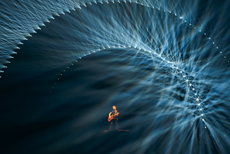
MA Lighting's grandMA3 Controls Lighting and Video for Jean-Louis Aubert ShowsLighting designer and programmer Valentin Nebati, of TightLight, served as lighting director and operator for singer-songwriter and guitarist Jean-Louis Aubert's PAFINI Tour, which saw the singer plus a full band play shows across France, Belgium, and Switzerland, culminating in a massive finale at Paris' La Defense Arena in December. Nebati chose to work with an MA Lighting grandMA3 control system for lighting and video control after joining Aubert's creative team in February 2025, where he was working closely with lighting and set designer Jordan Magnee to create the show's eye-catching aesthetic. The pair, who have been collaborating since 2018, have a regular working method. Usually, Magnee will have the principal ideas for the look and visual styling of cues and scenes, to which Nebati will add flourishes of detail unleashed by his expertise as a programmer and love of music. Nebati has been using the grandMA control platform since his career launched 15 years ago. He has been using version 3 since the software's initial release and has been regularly running shows fully on grandMA3 since 2024. For this tour, he used a grandMA3 full-size console for the arena shows; for other venues, including festival dates, he had two grandMA3 lights. The final stadium date required four grandMA3 lights and one grandMA3 full-size. The PAFINI Tour brought together the blockbuster hits of Aubert, well-known as frontman of iconic French rockers Telephone, with his newer, more introspective and complex solo works, celebrating his 50 years as an artist. The stage design was defined by a semi-circular LED screen upstage surrounded by four concentric LED arches, with lights popping through the gaps. In terms of lighting fixtures, for the non-arena shows, Nebati controlled approximately 300 lighting units, about 225 moving lights from three or four leading manufacturers, plus strobes and blinders. The number was boosted to around 650 for the arena shows and the finale, all supplied by rental company MPM. Playback video appearing on the screen surfaces was played through a Smode media server and fed into Nebati's grandMA3 console Art-Net, giving him the scope to apply nuances and specific effects. The grandMA3 was run completely manually. The ability to combine lighting and video sources brought an additional layer of organic harmony to the performance. "grandMA3 is a very powerful and flexible system for programming and running any show," Nebati says when asked about his choice of visual control. He used multiple grandMA3 software features, including Phasers, Recipes, and specific time delay and fade. Recipes is a function he finds invaluable, especially for festivals. "It's extremely quick and straightforward to clone fixtures and adapt to using a different lighting rig every day by utilizing Recipes," he explains. He also mentions multi-touchscreen control and Gestures as useful, time-saving tools that enhance navigating screens, streamlining an already fast and efficient process. Nebati used the XYZ function to quickly adjust positions despite the projectors being rigged in an arc, commenting that switching between XYZ and pan/tilt functions can be done very easily with grandMA3: "Being able to combine these two functions is a real advantage." He thinks the macros' automatic naming/numbering of sequences is another handy feature, enabling the movement and re-ordering of multi-executor sequences if needed, and he also takes advantage of yet more adaptability with recast on the presets. He frequently leans into the GDTF/MVR function for the swift importation of fixtures to the patch, and highlights that when working with multi-source fixtures, it is very important and quick to previz and program a design using the GDTF file. "For me, it is this incredible functionality and power that makes grandMA3 such a brilliant control system. The workflow is great; the configurable screens enable me to change everything on the console if needed -- all the parameters and executors -- everything is possible in this software. It is also ideal to be able to personalize using macros. I appreciate the fact that to achieve any one task using grandMA3, there are always three or four options to attain the same result; it's a really comprehensive solution." 
|