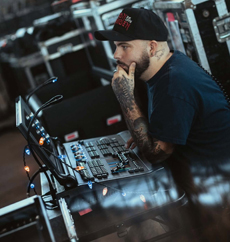
Austin Zangi Conjures Up Subtle Power for Seether with CHAUVET ProfessionalAustin Zangi is artfully limiting color mixing, brightness, strobing, and other elements for Seether, the South African rockers currently on tour in the US. Deftly wielding dark space as a design tool and covering parts of the stage in monochromatic hues, he creates looks that flow in sync with this client's music. Running his cue-stacked and busked show on his ChamSys MagicQ MQ250M console, Zangi uses his Elite Multimedia-supplied rig to speak volumes in subtle and sometimes not-so-subtle ways. The positioning of his ten CHAUVET Professional Color STRIKE M and 22 EPIX Tour IP fixtures varies as the tour stops at different venues. "On this tour, we are playing amphitheaters with three arena shows," Zangi says. "So, I'm constantly updating positions each day. If we were to walk into a room where something has to change, whether it's the floor package or flown rig, I'll adapt to it while trying to make sure the audience is still seeing the same Seether show." Zangi has six Color STRIKE Ms on carts that mainly face forward, while two other units are used to uplight his "abnormally scenic large scenic guitar cabinets." The remaining pair of Color STRIKE Ms uplight the drummer, creating attractive two-tone looks. Additionally, Zangi has 15 one-meter EPIX Strips and ten half-meter EPIX Strips scattered throughout his four lighting carts; the exact configuration varies depending on the show. One constant thing, however, is Zangi's reliance on dark space to set gripping moods. "Darkness is a really important part of the design," he explains. "I don't feel like everything on the stage needs to be visible all the time. Seether's music has a lot of dynamics and emotions to it, so I wanted the lighting to reflect that. There are sections where I'll intentionally keep the stage very dark, and then when the song opens up, it makes those bigger moments feel much more powerful. "I also rely on a lot of monochromatic looks," he says. "They work really well with Seether's music too. Rather than constantly changing colors just because I can, I like committing to a color and letting the intensity, direction and movement of the light create the mood. It gives the show a more cohesive feel and lets the lighting support the music without becoming a distraction." Zangi follows a similar approach to strobing; at times, he will strobe the entire rig, then limit it to the stage deck, dropping it completely at other points. "If you're strobing constantly, eventually it stops meaning anything," he explains. "I treat strobing almost like another instrument in the arrangement. It needs to have dynamics. Sometimes it's subtle and sometimes it's aggressive. "Taking this approach is all part of lighting a band whose music can go from intimate and emotional to extremely heavy within the same song," Zangi says. "I try to make the lighting follow that journey. To me it's not about just lighting the band. I want the lighting to feel connected to what you are hearing." 
|