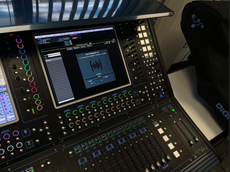
Alpha Labs Brings De-Feedback to Fourier Audio's transform.engineAlpha Labs LLC, the creators of the De-Feedback live audio plug-in, has announced that De-Feedback V1 is now officially available for use with Fourier Audio's transform.engine, a premier hardware platform for reliably bringing VST3-native studio plug-ins to live productions. "Engineers at the top of their game have always demanded cutting-edge tools, and Fourier Audio's transform.engine provides the ideal platform for accessing the next generation of AI-enabled plug-ins for results in the mix that were previously unimaginable," says Fourier Audio CEO Pete Bridgman. "We've worked closely with Alpha Labs to optimize De-Feedback's intense AI processing for compatibility with transform.engine's unique chain sandboxing technology, giving engineers the revolutionary power of De-Feedback's gain-before-feedback improvement alongside the battle-tested reliability of transform.engine's best-in-class hosting. We're proud to support the frontier of what's possible in outboard processing to help engineers harness the incredible power of AI as it changes the game -- both today, and in the future." Using advanced AI processing, De-Feedback is a groundbreaking audio plug-in that helps users achieve more gain before feedback from live microphones, largely removes room reverb, and reduces background noise -- with no degradation to vocals and operating at zero added latency. The plugin is quickly becoming the standard "must have" choice for both professional and novice engineers across a broad range of live sound applications: from nightclubs and concert tours to corporate and broadcast/streaming productions to theatres and houses of worship. On the transform.engine, Elite De-Feedback users are able to run six instances with chain sandboxing, plus other plugins, configuration dependent, at buffer sizes of 64 at 48k or 128 at 96k. And Fourier Audio's native worksurface integration with DiGiCo consoles ensures that the plugin will perform seamlessly and reliably on any Quantum Range desk. Sound engineers will quickly appreciate De-Feedback because instead of "burning" all of their EQ fighting feedback and destroying the vocal sound in the process, they can count on more important things, like shaping the vocal tone and getting the mix that they really want. As an example, Andrew "Fletch" Fletcher recently tried out the plug-in on the transform.engine at the Survivor 50 Live Finale at Paramount Studios, which was aired on CBS. "My Fourier unit was loaded with a Beta version of De-Feedback running six instances inserted on groups on my Quantum338 and I was using no other plug-ins in the chains," he says. "Everyone was on lavs, with the occasional use of hand mics when the host was out in the 1,200-seat audience in front of the PA. In all, I had 24 open lavs at certain points in the show. With De-Feedback, the lavs were strong and intelligible in the PA and in the stage mix minus feeds, contestants and host could hear each other, and there was not even a hint of feedback. I'm always stunned by how little EQ I need when using De-Feedback. The DSP cores on the Fourier averaged a load on 33% with the six instances so there was no stress on the system. Without this plug-in I would not have been able to achieve the SPL levels I needed and have the confidence to push mic levels when necessary. As I seem to say on every show now, De-Feedback is a game-changer!" 
|