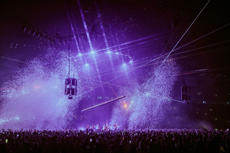
MSA Supplies Automation for Dua Lipa Tour Denmark-based Motor Stage Automation (MSA) supplied a complete automation system -- comprising Moveket VMK-S 500 vari-speed hoists, Moveket V-Motion 40 E-drives, a specially modified Alfasystem M-1020L stage lift, and Moveket control -- to facilitate several scenic, creative, and technical solutions for Dua Lipa's Radical Optimism Tour. Moving objects included two 8m and 5m diameter "astrolabe" LED rings, six lighting pods, a "puck" on which the artist flew above the stage -- while the two astrolabes created kaleidoscope effects above -- and the upstage lift, used extensively for stage access throughout the performance. The production design was a collaboration between tour and creative director Pete Abbott and show designer Matt Pitman, who also created the lighting scheme. Sam Jackson was head of automation, and Ross Maynard was the production manager, coordinating all technical departments. Jackson and Maynard decided to get MSA on board to help provide a tour-ready solution, and together with MSA's project manager, Jimmy Johnson, designed a tourable automation system. It met all required EU safety regulations and was fine-tuned to be as practical and portable as possible to assist with quick and efficient load-ins and -outs. The astrolabes were custom-made circular set pieces with integrated LED products that flew in and out and pitched and turned around each other. The astrolabes were each rigged on four Moveket VMK-S 500 variable-speed hoists, and the puck on three. Two motors each were allocated to the six lighting pods -- positioned downstage left and right -- loaded with eight moving lights, eight strobes, and one laser on each -- giving a total of 23 active hoists over the full performance area. The pod motors were synced to run at the same time and speed, with all operated by George Davies, located at the front of house, using a Moveket Expert-T III console and the Moveket KES operating system. PosiStageNet positional data was sent from the Expert III to the special effects department's grandMA3 control console, and for safety, special effects set limits at its end, instructing the laser cues not to run unless the pod was stopped in certain pre-defined positions -- calculated with some necessary tolerance. If the position did not stop between these parameters, the ES was automatically activated, and the lasers did not switch on. A major challenge for the automation department, Jackson notes, involved integrating all elements -- lighting, video, lasers -- around the arena, merging the system and running everything back to the front of house and Davies' operating position next to lighting director Aaron Veness with tidy and expedient cable management. The stage lift was positioned upstage center and was designed, built, and commissioned by MSA based on an Alfasystem stage lift that was modified to meet the specific requirements of this show. The lifting mechanism was a SERAPID motor-driven chain lift rather than hydraulic. It all ran off a 32A power supply and was compliant with the EN 17206 "machinery for stages" EU standard. The lift was controlled via a Moveket Basic controller, which was separate from the rest of the moving elements and moved 8.2' up and down. The desk allowed different-level user access to be set up for load-in and show run, so the set carpenters running it during the show could only execute cues programmed by the automation team. They simply had to push the joystick up or down, and the lift moved to the precise correct positions." For the load-ins and -outs, the automation was split, with the B Stage going in and being rigged first, followed by the stage overheads and then the overheads further down the room. The automation team also comprised technicians Alex Hughes and Joseph Rapson. 
|